Every big construction job needs bulldozers to move earth and shape the ground, and the people who run them well are in steady demand. Your first step into bulldozer training can happen online and cost nothing, before you commit time or money to a course or a school.
What used to stop people was the price tag. A formal bulldozer program meant paying a private school in advance, well before any operator paycheck arrived.
That picture has shifted. Thanks to free online courses, you can study safety and theory up front and then take that advantage into real, hands-on bulldozer training.
Here is what this guide promises: an honest look at the free route. You will find real foundations and a certificate of completion, but not hands-on skill or the license some states require.
Begin your free bulldozer training
Why bulldozer training is worth your time
Good pay is reason number one. The U.S. Bureau of Labor Statistics places bulldozer work under construction equipment operators, who earned a median wage of 58,320 dollars per year in May 2024.
Demand holds steady over time. The BLS projects about 4 percent employment growth for construction equipment operators through 2034, and skilled dozer operators remain in demand on grading and site prep crews.
On top of that, there is no degree to pay for. Most operators start out with a high school diploma and move up through training, an apprenticeship, or on the job experience.
Where bulldozer operators work and which jobs pay most
Site preparation, road and highway building, land clearing, mining, and landfill work all need dozer operators. Spread across that many fields, the career keeps going strong for years.
Your pay grows with your skill and setting. Heavy construction, mining, and prevailing wage jobs often pay more than general site work, and fine grading skill is especially valued.
Union membership and apprenticeships also push pay higher. It is one more reason the apprenticeship path, explained further down, suits a new bulldozer operator so well.
What a bulldozer does on site
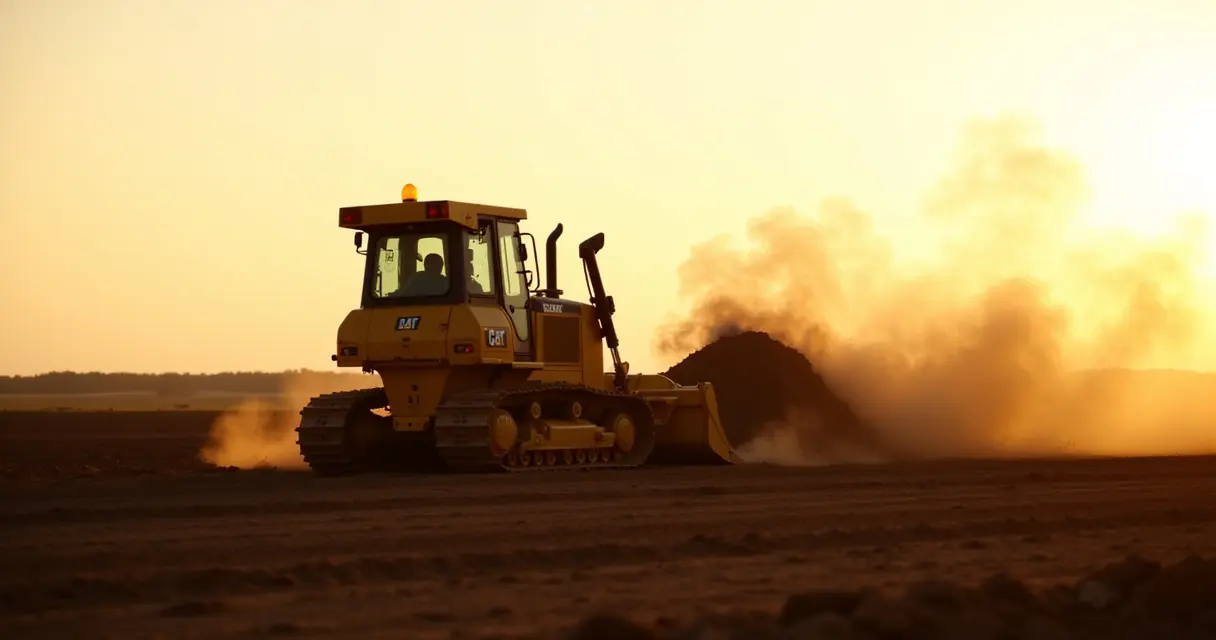
The heavy blade on the front is what lets a bulldozer push, spread, and level material. With it, the machine prepares sites, cuts grades, and clears land ahead of the next phase.
Learning to fine grade with a dozer takes real time. Skilled operators sense the blade, read the slope, and look out for the crew working nearby.
That is where training earns its keep. A dozer carries a lot of power, and a trained operator steers clear of the errors that waste a job's time and money.
Types of bulldozers you might operate
Dozers vary in size and configuration, and every type matches a different task. Learning the differences lets you shape your training around the job you want.
Small and utility dozers
Small dozers handle landscaping, utility work, and tight sites. They give a new operator a friendly place to build early skill and confidence.
Medium crawler dozers
Most grading and site prep on construction jobs falls to medium dozers. That is why most training, and most of the jobs, focus on this size of machine.
Large dozers
Large dozers tackle heavy earthmoving, mining, and land clearing. They usually reward operators who already bring solid hours and a strong safety record.
What bulldozer certification and licensing really require
Let us be clear about one thing. A completion certificate is proof that you studied, not the license some states require to operate a bulldozer or a loader.
Requirements differ from one state to the next, so look up your local rules before training. Across the board, employers want proof that you can run the machine safely.
If the job means hauling the dozer between jobsites, you may need a commercial driver license, or CDL, as well. It is a paid license from the state, and a free course cannot provide it.
What "free" really covers, and what it does not
What you get for free is the knowledge. Machine parts, safety rules, and grading basics come at no charge, and the certificate at the end shows initiative.
What you do not get for free is seat time on a real dozer, a state license where required, or a CDL. Each is its own step, and planning for them early is the honest approach.
How online bulldozer training works, and where it stops
Online learning really shines for the material that lives in your head. Machine parts, safety rules, and grading basics can be covered before you ever step up into the machine.
Seat time is where it ends. There is no app that can teach your hands what the blade feels like on soft or sloped ground.
That makes the free course your first step, not your last. You head into hands-on practice already familiar with the terms and the safety rules.
What you need to learn
- Bulldozer parts and controls, and the role of each one
- Core safety rules and OSHA-aligned habits
- Daily inspection plus basic maintenance checks
- The basics of pushing, spreading, and grading material
- Reading slopes and working safely when people are near
- How the certification and licensing steps line up
Safety practices every bulldozer operator should know
Safety tops the list of what employers care about, and the free course pays off here first. Good habits protect you, your crew, and the equipment.
- Inspect the machine before each shift and report anything wrong
- Wear the right protective gear and keep it on all day long
- Know your blind spots and rely on a spotter when needed
- Read the ground and watch every slope to avoid a rollover
- Keep the crew clear of the blade and away from the work path
Going into hands-on training already knowing these rules makes you safer and more hireable. It is one more argument for finishing the free foundations.
Best free and low cost resources
The options below are legitimate starting points for bulldozer training. Remember that the routes leading to a real job are usually in person and funded, not a quick online badge.
- Alison: free online courses in equipment and construction subjects, ending in a completion certificate.
- OSHAcademy: free safety training based on OSHA topics, useful on every site you work.
- CareerOneStop: locate WIOA funded hands-on training in your area.
- IUOE apprenticeship: paid training that builds real hours through the operating engineers union.
Is bulldozer training really free? The honest cost breakdown
You pay nothing for the online course. Later steps can carry a price, so here is an honest map of where costs may appear before you land a paid dozer job.
| Step | Typical cost |
|---|---|
| Online foundations and safety course | Free |
| Hands-on training at a private school | Paid, unless WIOA or an employer pays for it |
| State license, where required | Paid, varies by state |
| Apprenticeship route | You earn a wage while you train |
How long it takes to become a bulldozer operator
Expect the free online foundations to take days to a few weeks, at whatever pace suits you. Only your own speed decides that part.
The hands-on part takes longer. A short private program can last a few weeks, and an apprenticeship builds skill over a few years while paying you.
So here is the takeaway. You can begin learning for free today, yet becoming job ready is a path, not one afternoon of work.
The smartest free path: apprenticeship
When the goal is real training with zero debt, an apprenticeship is the strongest route. Operating engineers union programs mix classroom learning with seat time that pays.
You get a paycheck during training and finish with real hours that employers trust. Government workforce programs like WIOA may also cover your training if you qualify.
Put the free online course to work preparing for the entry test and the interview. Already knowing the basics when you walk in makes you a more competitive candidate.
Can an online course replace in person training?
No. Any site that says it can is selling something. You can take the classroom part online, but not the machine part, and that requires real hours on a real dozer.
Will employers accept your certificate?
As a signal, it works. A completion certificate shows initiative and tells employers you understand bulldozer basics before your first day.
As a substitute, it does not. Hands-on hours, the OSHA safety card, and a state license, if your role needs one, are still on you.
Red flags to watch out for
- Sites that offer a "license" or "certification in days" completely online
- Courses charging for an official state license they cannot issue
- Pages that skip any mention of hands-on training, OSHA, or a CDL
- Badges labeled "certified" that really mean "finished the video"
Expanding your skills to other machines
After you get comfortable on a dozer, a second machine boosts your value and your earnings. Plenty of operators branch out to excavators, dump trucks, or cranes.
Cranes pay among the best, though crane work requires NCCCO certification. Each machine you learn widens your reach in the construction job market.
Tips to start your bulldozer career strong
Some simple moves will make your first months go more smoothly and help you stand out to employers searching for reliable operators.
- Finish the free course and hold on to the certificate to show initiative
- Ask about helper or ground roles that bring you near the machines
- Keep your record clean and your schedule reliable from day one
- Find out local pay rates so you can negotiate fairly
- Sign up for safety training every time it is offered
Operators who give the early steps their full attention move up faster. The free foundations are the easiest first win, so begin there and keep logging real hours.
Your next steps
Start free and stay on the honest path. To see every machine in one view, read our main guide to free heavy equipment training and check all the free paths in the high-paying jobs hub.
- Take a free bulldozer or heavy equipment course to learn the basics
- Review your state rules, because some states license dozer operators
- Get hands-on training through a local program, WIOA, or an apprenticeship
- Apply with the free certificate leading the way, and keep building real hours
Frequently asked questions
Does a free bulldozer training course exist?
It does. Alison and similar sites run free online courses on the foundations, with a certificate of completion at the end. Hands-on training comes separately.
Is a license needed to operate a bulldozer?
Your state decides. A few states issue special licenses for bulldozer and loader operators, and hauling the machine can require a CDL.
How much can a bulldozer operator make?
As construction equipment operators, they earned a median of 58,320 dollars per year in May 2024, according to the BLS. Pay goes up with skill and setting.
How much time does bulldozer training take?
The online foundations take days to weeks, at your own pace. Hands-on grading skill takes anywhere from weeks to a few years, based on whether you pick a school or an apprenticeship.
Is free bulldozer training possible?
For the foundations, yes. Real hands-on training can also be free through WIOA funding or a paid apprenticeship, as long as you qualify.
Is a bulldozer harder to run than an excavator?
Each comes with its own learning curve. Dozer work calls for fine blade control and reading slopes, while excavator work calls for control of the boom and swing.
Must I own a bulldozer to train?
Not at all. Schools and apprenticeships supply the machines, and the free online course asks for nothing more than a phone or computer and internet access.
Can an online course alone get me a job?
It helps as a signal, but most employers want real seat time and the safety credentials that go with the role.